Reporting a dog attack is only the beginning. Most victims have no idea what happens after you report a dog bite in California, and that uncertainty can be stressful at a time when you’re already dealing with pain, medical bills, and a disrupted routine. Once a report is filed, a structured process kicks in involving animal control, public health officials, and sometimes law enforcement. Understanding each stage of this process helps you protect your health, preserve your evidence, and put yourself in the strongest possible position if you decide to pursue compensation.
This guide walks through every phase of what happens after a dog bite report is filed in California, from the moment animal control receives your call to how the resulting documentation can shape an injury claim.
What Happens After You Report a Dog Bite in California?
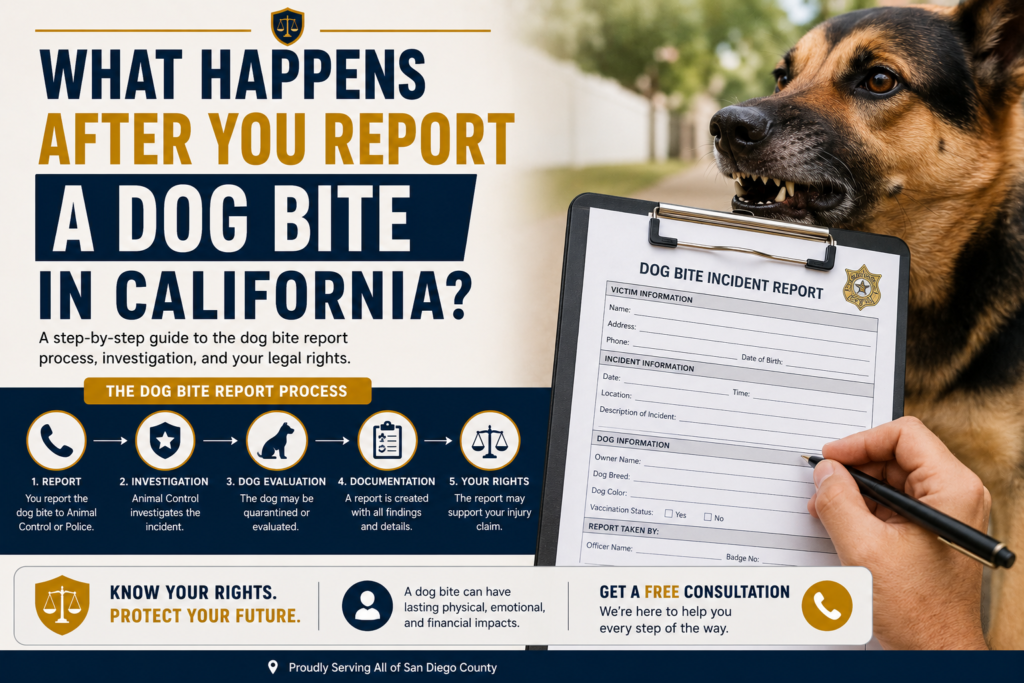
Once you report a dog bite in California, the case typically moves through several distinct phases. While exact procedures vary slightly between cities and counties, the general sequence looks like this:
- The report is logged with animal control or law enforcement
- An investigator is assigned to the case
- The victim is contacted for additional details
- The dog owner is identified and contacted
- The dog’s vaccination and bite history are reviewed
- A quarantine period is established, if required
- A final determination is made about the dog’s status
- The report becomes part of the public record
Each of these steps creates documentation that can later support an injury claim. Understanding what happens after you report a dog bite in California also helps you know what to expect, what cooperation is required from you, and when it’s time to bring in legal help. For background on the broader aftermath of an attack, our earlier article on what happens after a dog bite in California covers the immediate medical and legal steps victims should take.
Why Reporting a Dog Bite Matters
Some victims hesitate to report a bite, particularly when the dog belongs to a neighbor, friend, or family member. It’s natural to feel conflicted. But reporting serves purposes that go beyond punishing the owner or the dog.
Reporting a dog bite in California matters because it:
- Creates an official, time-stamped record of the incident
- Triggers a rabies risk assessment to protect your health
- Helps identify whether the dog has bitten others before
- Establishes a paper trail that supports any future injury claim
- Allows public health officials to track and respond to dangerous animals in the community
Without a report, you’re left relying solely on your own memory and whatever evidence you managed to collect at the scene. A formal report adds a layer of independent verification that insurance companies and courts take seriously.
Who Receives the Report?
Depending on where the attack happened, your report may go to one or more of the following:
- City or county animal control services
- Local police department, particularly for serious attacks
- Your treating doctor or hospital, who may be required to notify public health officials
- Animal services for the jurisdiction where the dog owner resides, if different from where the attack occurred
If you’re unsure where to direct your report, your treating physician or the emergency room staff who treat your wounds can usually point you in the right direction, since medical providers are often obligated to report animal bites themselves.
How Does Animal Control Investigate a Dog Bite?
Once your report is received, it’s typically assigned to an animal control officer who begins a formal investigation. This isn’t a quick phone call and a closed file. The investigation is meant to establish facts, assess risk, and determine appropriate next steps for the dog and its owner.
Initial Case Review
The assigned officer will first review the basic facts of your report: the date, time, and location of the bite, a description of the dog, and any information you have about the owner. If you reported through a hospital or police referral, the officer may also review those records before reaching out to you directly.
Victim Interviews
Expect a follow-up call or visit from an animal control investigator. They’ll typically ask you to walk through what happened in detail, including:
- What you were doing immediately before the attack
- Whether you knew the dog or its owner
- Whether the dog showed any warning signs before biting
- Where exactly the bite occurred
- Whether anyone else witnessed the attack
- The extent of your injuries and whether you sought medical care
Answer honestly and stick to the facts. Avoid speculating about things you didn’t actually witness, and don’t feel pressured to minimize what happened. This interview becomes part of the official record, so accuracy matters.
Locating and Contacting the Dog Owner
Investigators will attempt to identify and contact the dog’s owner using information from your report, witness statements, or local licensing records. Once located, the owner is typically asked to provide:
- Proof of the dog’s rabies vaccination
- Local licensing or registration documents
- Information about the dog’s history, including any prior incidents
- Their account of what happened during the attack
Owners are generally required to cooperate with this process, though, as discussed later in this guide, that doesn’t always happen smoothly.
Reviewing Bite History and Records
Part of every dog bite investigation in California involves checking whether the animal has a documented history of aggression. Investigators search local records for prior complaints, citations, or quarantine history associated with the dog or its owner’s address. A pattern of prior incidents can lead to a more serious classification of the dog and can also become important evidence in a subsequent injury claim, since it may show the owner had prior knowledge their dog posed a risk.
Site Visits and Evidence Collection
In many cases, an investigator will visit the location where the attack occurred. This allows them to:
- Verify the physical layout described in your report
- Check for any posted warning signs, fencing, or containment issues
- Look for available video footage from doorbell cameras or security systems
- Speak with neighbors or other witnesses
This on-the-ground investigation often produces some of the most persuasive evidence in a dog bite case, particularly when it documents inadequate containment or a history of the dog roaming unsupervised.
What Happens to the Dog After a Bite Is Reported?
This is one of the most common concerns victims have, especially if they have any personal connection to the dog or its owner. The outcome depends heavily on the severity of the bite, the dog’s vaccination status, and whether it has bitten before.
Rabies Quarantine Requirements
California’s public health regulations require dogs involved in a bite incident to undergo a rabies observation period, typically lasting ten days. This quarantine isn’t a punishment. It’s a public health safeguard designed to confirm the animal isn’t carrying rabies, which protects you as the victim as well as the broader community.
During this period, the dog may be quarantined:
- At the owner’s home, if the dog is currently vaccinated and the owner can ensure secure confinement
- At a licensed veterinary facility, often at the owner’s expense
- At an animal control shelter, particularly when the owner is uncooperative, the dog is unvaccinated, or there are concerns about containment
The California Department of Public Health provides guidance that local agencies follow when determining quarantine procedures and rabies risk assessments after a reported bite.
What Happens If the Dog Has No Prior Incidents?
If the investigation finds no history of aggression and the dog is properly vaccinated, the animal typically completes its quarantine period and returns to normal life with its owner. The case file remains on record, but no further action may be required unless additional incidents occur later.
Dangerous Dog Investigations
If the dog has a documented bite history, attacked without provocation, or caused severe injury, animal control may open a formal dangerous dog investigation. This is a more serious process that can result in:
- Mandatory muzzling requirements in public
- Secure containment orders, such as required fencing or enclosure standards
- Liability insurance requirements for the owner
- Formal designation of the dog as dangerous or vicious under local ordinance
This classification can carry significant weight if you later pursue a compensation claim, since it demonstrates an elevated, documented risk that the owner was required to address.
When Does Animal Control Remove a Dog?
Removal is reserved for the most serious cases. Animal control may remove a dog from its owner when:
- The dog has a documented history of multiple bites
- The owner refuses to comply with quarantine or containment orders
- The attack resulted in severe injury or was unusually vicious
- The owner cannot be located or refuses to cooperate with the investigation
Removal proceedings often involve a hearing process where the owner can respond to the findings before a final decision is made.
What Happens to the Owner?
Beyond the dog’s fate, owners themselves can face consequences depending on local ordinances and the severity of the incident. This may include citations for licensing or vaccination violations, fines, or, in dangerous dog cases, court-ordered compliance requirements. These administrative actions are separate from any civil compensation claim you may pursue, but the findings from this process often become useful evidence in that claim.
If the Owner Refuses to Cooperate
Not every owner cooperates willingly. Some deny their dog was involved, refuse to provide vaccination records, or simply avoid contact with investigators. When this happens, animal control typically relies on:
- Witness statements and victim interviews
- Neighborhood canvassing
- Veterinary records tied to the dog or address
- Photographic or video evidence
An uncooperative owner doesn’t end the investigation, and it doesn’t prevent you from pursuing a claim. In fact, this kind of behavior can sometimes work against the owner later, particularly if a court views it as an attempt to avoid accountability. If your case reaches this stage, it’s worth speaking with a dog bite lawsuit attorney in San Diego to understand your options.
If the Dog Cannot Be Found
Stray dogs and hit-and-run style attacks present unique challenges. If the dog cannot be located, public health officials may need to take a more cautious approach to your medical care, since they can’t confirm the animal’s rabies status. This sometimes means your doctor recommends preventive treatment out of caution. Investigators will continue trying to identify the dog through witness descriptions, local shelter records, and any available footage, but these cases can take longer to resolve.
Does a Dog Bite Report Help Your Compensation Claim?
Yes, significantly. A formal dog bite report is one of the strongest pieces of supporting evidence you can have when pursuing compensation for your injuries.
Why the Report Matters for Your Claim
California operates under a strict liability standard for dog bites. According to California Civil Code Section 3342, a dog owner can be held liable for injuries caused by their dog even if the animal has never shown aggression before. This means you don’t have to prove the owner knew the dog was dangerous, only that the bite occurred and caused your injuries.
The official report supports this by providing independent documentation of:
- The date, time, and location of the attack
- The identity of the dog and its owner
- Any prior history of aggression
- The investigating officer’s observations and findings
- The outcome of the quarantine or dangerous dog investigation
This kind of third-party documentation is difficult for an insurance company to dispute, especially compared to relying solely on your own account of the incident.
What Evidence Investigators Collect
Throughout the investigation, animal control typically compiles a file that may include:
- Written statements from you and any witnesses
- Photographs taken during the site visit
- Records of the dog’s vaccination and licensing status
- Notes on the dog’s behavior during the investigation
- Documentation of any prior complaints or incidents
This file isn’t automatically part of your injury claim, but you or your attorney can request a copy to support negotiations with the insurance company. For more detail on what kind of evidence strengthens a claim beyond the official report, see our guide on what evidence you need for a dog bite claim in California.
Medical Documentation Still Plays a Central Role
While the animal control report establishes the facts of the incident, your medical records establish the extent and value of your damages. Insurance adjusters and courts look at both together. Make sure you:
- Seek treatment immediately and follow through with all recommended care
- Keep copies of every bill, prescription, and treatment note
- Photograph your injuries throughout the healing process
- Document any missed work or lost income related to your recovery
Notifying the Insurance Company
Once you have the dog owner’s information from the report, the next step is notifying their homeowner’s or renter’s insurance company. Most dog bite compensation in California is paid through these policies. Our article on who pays for a dog bite injury in California breaks down how this typically works, including what to expect once an insurer opens a claim file.
If you’re ready to begin this process and want guidance from the start, our dog bite claim page outlines how we help victims throughout San Diego County build strong, well-documented claims.
Timeline: What to Expect After Filing a Report
While every case is different, a general timeline after reporting a dog bite in California often looks like this:
First 24 to 48 Hours
Your report is logged, and an investigator is typically assigned. You may receive an initial call to confirm basic details of the incident.
First Week
The investigator interviews you in more detail, attempts to contact the dog owner, and may visit the scene of the attack. Quarantine arrangements are usually established during this period if required.
Ten Days to Two Weeks
The rabies quarantine period typically concludes around this time, assuming no issues arise. The investigator finalizes findings regarding the dog’s vaccination status and behavior during observation.
Two to Four Weeks
The investigation file is generally finalized, and any dangerous dog proceedings, if applicable, begin to move forward. This is also a reasonable time to request a copy of the completed report for your records.
Ongoing
If you’re pursuing compensation, this is when insurance notification, claim documentation, and potential negotiations typically ramp up, often running in parallel with the later stages of the animal control investigation.
Common Mistakes After Reporting a Dog Bite
Filing the report correctly is important, but what you do afterward matters just as much. Avoid these common mistakes that can weaken your claim or complicate the investigation:
Assuming the Report Alone Guarantees Compensation
The report supports your claim, but it doesn’t automatically result in a payout. You still need to pursue the insurance claims process and document your damages.
Not Following Up With Animal Control
Investigations can take time, and case files aren’t always sent to victims automatically. Follow up periodically and request a copy of the final report once it’s available.
Skipping Medical Follow-Up Appointments
Gaps in treatment give insurance companies a reason to argue your injuries weren’t as serious as claimed, or that something other than the dog bite caused your ongoing symptoms.
Giving Statements Without Preparation
Both animal control and insurance adjusters may ask you to describe what happened. Be honest and accurate, but avoid speculating, exaggerating, or downplaying your injuries in either context.
Posting About the Incident on Social Media
Comments or photos posted online can be taken out of context and used against you later, even if your intent was simply to update friends and family.
Waiting Too Long to Contact a Lawyer
If the owner disputes liability, the insurance company denies your claim, or your injuries are more serious than initially expected, waiting too long to get legal advice can cost you leverage and, in some cases, put you at risk of missing California’s filing deadlines.
When to Contact a Lawyer After Reporting a Dog Bite
You don’t have to wait for a problem to arise before speaking with an attorney. It’s often beneficial to consult a lawyer shortly after the investigation begins, particularly if:
- Your injuries required stitches, surgery, or ongoing medical treatment
- The dog has a documented history of prior bites
- The owner is disputing what happened or refusing to cooperate
- The attack resulted in visible scarring or long-term effects
- A child was involved in the attack
- You’re unsure how to handle communication with animal control or the insurance company
An experienced attorney can request the full investigation file, communicate with animal control and insurers on your behalf, and ensure nothing in the report gets overlooked when building your claim. For attacks involving more serious or permanent injuries, our dog attack injury lawyer page explains how these cases are handled differently from minor bite claims.
Local Guidance Throughout San Diego County
Animal control procedures can vary slightly between jurisdictions, and having local knowledge matters. We’ve guided dog bite victims through investigations and claims throughout the region, including residents searching for a dog bite lawyer in Downtown San Diego, a dog bite lawyer in Chula Vista, and a dog bite lawyer in El Cajon. Familiarity with local animal control offices and their reporting procedures allows us to move quickly when requesting records that support your claim.
Frequently Asked Questions
What happens after you report a dog bite in California?
After you report a dog bite in California, animal control typically opens an investigation, interviews the victim, contacts the dog owner, verifies vaccination records, and arranges a rabies quarantine period before finalizing a report that documents the incident.
How long does the investigation usually take?
Most investigations, including the standard rabies quarantine period, are largely resolved within two to four weeks, though dangerous dog proceedings or uncooperative owners can extend this timeline.
Will I be notified of the investigation results?
You can typically request a copy of the final report from animal control once the investigation is complete. It’s a good idea to follow up directly rather than waiting for it to be sent automatically.
Can I file an injury claim while the investigation is still open?
Yes. You can begin the insurance claims process while the animal control investigation is ongoing, though having the final report can strengthen your position during negotiations.
What if the dog owner disputes the investigation’s findings?
If the owner disputes liability or the investigation’s conclusions, this is often a strong sign that you should consult a dog bite attorney to help protect your claim and prepare for the possibility of formal litigation.
Get Legal Guidance After Reporting a Dog Bite
Understanding what happens after you report a dog bite in California helps you stay informed and prepared throughout a process that can otherwise feel confusing and out of your control. From the animal control investigation to quarantine procedures and the eventual insurance claim, each step plays a role in protecting your health and your right to compensation.
If you’ve recently reported a dog bite and want help understanding your next steps, our team is here for you. Contact us today for a free dog bite consultation and let an experienced California dog bite attorney guide you through every stage of the process. Visit dogbitelawyersandiego.com to learn more about how we help victims throughout San Diego County pursue the compensation they deserve.