When a dog attacks a child, the aftermath is overwhelming. You’re managing emergency care, a frightened and hurting child, and a flood of questions you don’t know how to answer. If your family is dealing with a child dog bite injury California law can help you pursue, this guide explains exactly what you’re entitled to, how the legal process works when the victim is a minor, and what mistakes to avoid before you talk to anyone about a settlement.
California gives dog bite victims strong legal protections. For children, those protections are even more consequential, because the physical and emotional damage a dog attack causes at a young age can follow a child for years. Understanding the law before the insurance company makes its first move is the most important thing a parent can do.
Why Dog Bites Are More Serious for Children
Children aren’t just smaller adults. Their bodies, their developmental stage, and their relationship with dogs all make them uniquely vulnerable to serious injury in a way that rarely gets the attention it deserves when people talk about dog bite claims.
Physical Vulnerability
A dog that might cause a painful but manageable wound on an adult can cause catastrophic injury to a small child. The bite force stays the same. The body receiving it does not. Children’s skulls, facial bones, and soft tissue are less developed, meaning a bite to the head or face, by far the most common location in attacks on young children, can cause injuries that require multiple surgeries, leave permanent scarring, and in some cases cause lasting neurological damage.
Because young children are closer to the ground and make direct eye contact with medium and large dogs, the face, head, and neck are disproportionately targeted in child attacks. These are the injuries that require plastic and reconstructive surgery, that leave visible scars throughout a child’s life, and that generate the kind of long-term medical costs that need to be fully accounted for in any settlement.
Emotional and Developmental Impact
Children process trauma differently than adults, and dog attacks are genuinely traumatic events. Fear, nightmares, separation anxiety, aggression, and behavioral regression are all common responses in children who have been attacked. Many children develop a lasting phobia of dogs that affects their daily life for years. Some meet the clinical criteria for post-traumatic stress disorder.
The psychological impact of a dog attack on a child is a real and compensable part of the injury claim, not a secondary concern or an add-on. Therapy costs, developmental assessments, and the long-term effect on a child’s quality of life belong in the damages calculation. Our severe dog attack injuries page covers the full scope of damages that apply in serious cases.
Scarring That Grows With the Child
One aspect of child dog bite injuries that most parents don’t think about immediately is that scarring on a growing child isn’t static. A scar on a child’s face doesn’t stay the same size as the child grows. It stretches, changes shape, and may require revision surgeries at different stages of development. A settlement that only accounts for the surgery needed today may leave a family responsible for the costs of procedures needed five or ten years from now. This is one of the most important reasons why child dog bite claims require careful, forward-looking legal work.
Common Child Dog Bite Injuries
Every attack is different, but certain injury patterns come up consistently in child dog bite cases. Knowing what to watch for helps parents ensure every injury gets properly documented and included in the claim.
- Facial lacerations and puncture wounds. The most common serious injury in child attacks, often requiring immediate surgical closure and subsequent scar revision procedures.
- Nerve damage. Bites to the face, hands, or neck can sever or damage nerves, causing lasting numbness, weakness, or loss of sensation in ways that may not be immediately apparent after the attack.
- Crush injuries and broken bones. Larger dogs can exert enough bite force to fracture the bones in a small child’s hand, arm, or skull.
- Eye injuries. Bites near the eye area can threaten vision and almost always require specialist care.
- Infection. Dog bites carry significant infection risk, including serious bacterial infections that can require hospitalization and prolonged antibiotic treatment.
- Rabies exposure. While rare in California, rabies post-exposure treatment is physically demanding, emotionally difficult for a child, and expensive. It’s fully recoverable as part of the claim.
- PTSD and anxiety disorders. Psychological injuries are real injuries. They need to be documented, treated, and included in the damages.
What Compensation Can a Child Recover After a Dog Bite Injury California?
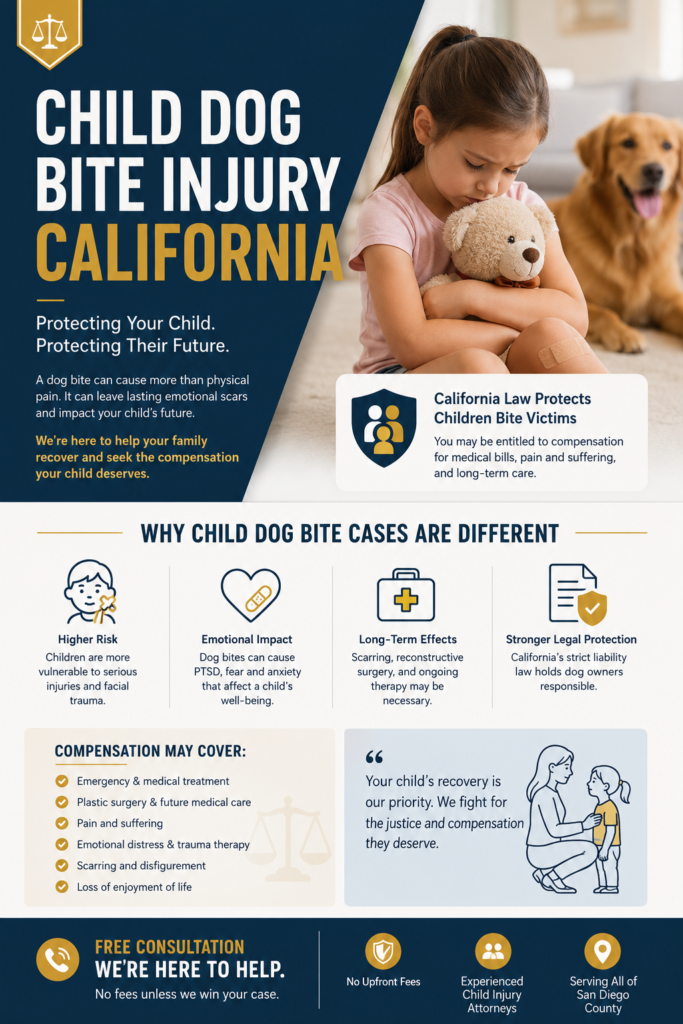
California’s dog bite statute, Civil Code Section 3342, makes dog owners strictly liable for injuries their dogs cause to people who are lawfully in a public place or on private property. That strict liability standard applies fully to children, and the damages a child can recover are broader than most parents realize.
Medical Expenses
All past and future medical costs tied to the attack are recoverable. For a seriously injured child, this is often the largest category of damages and the one that requires the most careful documentation and forward projection.
- Emergency room treatment and hospitalization
- Surgery, including initial wound repair and subsequent reconstructive procedures
- Plastic and cosmetic surgery for facial scarring
- Future scar revision surgeries as the child grows
- Prescription medications, including rabies treatment if required
- Physical therapy
- Mental health counseling and ongoing psychological support
- Specialist consultations, including plastic surgeons, neurologists, and ophthalmologists
- Medical equipment and follow-up care
Future medical costs for a child are particularly significant because a growing child may need multiple revision surgeries over many years. These projected costs need to be established through expert medical opinion, not estimated informally. Our article on dog bite medical bill compensation California covers how medical damages are documented and presented in these cases.
Pain and Suffering
Physical pain, emotional distress, fear, and the overall impact on a child’s daily life are compensable as non-economic damages. For children, courts and juries often take the permanence and visibility of scarring particularly seriously, especially facial scarring that a child will carry into adulthood.
The pain and suffering calculation for a child accounts not just for what happened, but for what the child will continue to experience: the teasing and self-consciousness that can come with visible scars, the lasting fear of dogs, the nightmares, and the way the attack changes a childhood that can’t be given back. Our article on pain and suffering in dog bite cases California explains how these damages are typically valued.
Future Damages and Long-Term Impact
This is the category most often undervalued when families try to handle claims themselves or accept an early offer. Future damages for a child can include:
- Future surgeries and ongoing medical care into adulthood
- Long-term psychological treatment
- Loss of future earning capacity if injuries cause lasting physical or psychological impairment
- Permanent disfigurement and its ongoing impact on quality of life
An insurance company’s early offer almost never accounts for these future costs. A settlement that looks substantial today can look completely inadequate five years from now when the next surgery is due.
California Strict Liability and How It Protects Injured Children
California Civil Code Section 3342 is one of the strongest dog bite statutes in the country from a victim’s perspective. Under strict liability, the dog owner is responsible for injuries their dog causes without any requirement to prove the owner knew the dog was dangerous or had bitten before. There is no “one free bite” rule in California.
For children, this matters enormously. A child attacked by a family friend’s dog, a neighbor’s dog, or a dog at a park doesn’t have to navigate a complex negligence argument. The owner’s liability is established from the moment it’s confirmed their dog caused the injury. The legal fight, when there is one, is almost always about how much compensation is fair, not whether the owner is liable.
There are narrow exceptions, including when a child was trespassing or when the child provoked the dog. But the provocation defense has a high bar, particularly for very young children, since courts recognize that small children don’t fully understand how their behavior affects animals. A child pulling a dog’s ear or startling it is not the same as the kind of deliberate provocation the statute contemplates.
What Makes Child Dog Bite Claims Different?
Child injury claims aren’t just adult claims with a smaller victim. There are specific legal rules and practical realities that apply when the injured person is a minor, and they affect nearly every stage of the process.
Parents File on Behalf of the Child
A minor cannot file a lawsuit or enter into a legal settlement on their own behalf. A parent or legal guardian acts as the child’s representative throughout the claims process. That means the parent makes decisions about strategy, negotiation, and whether to accept a settlement offer, but always with the obligation to act in the child’s best interest, not their own.
The Statute of Limitations Is Different for Minors
For most personal injury claims in California, the statute of limitations is two years from the date of injury. For children, it works differently. Under Code of Civil Procedure Section 352(a), the limitations period for a minor is generally tolled until their 18th birthday, giving them until age 20 to file a lawsuit in most circumstances.
This doesn’t mean families should wait. Evidence disappears, witnesses move, and memories fade. Building a strong claim requires acting while the evidence is still accessible. But it does mean the deadline pressure that applies to adult claims works differently here, which is worth understanding.
Court Approval Is Required for Most Minor Settlements
In California, any settlement over $5,000 involving a minor typically requires court approval through a petition to approve a minor’s compromise. A judge reviews the settlement to confirm it’s fair and in the child’s best interests before it becomes binding.
This process exists specifically to protect children from being undercompensated in settlements that parents might accept without fully understanding what’s being given up. It adds a procedural step but also provides an important safeguard. An experienced child dog bite attorney handles this process routinely and knows what courts look for when evaluating whether a settlement truly serves the child’s long-term interests.
Settlement Funds Are Often Structured or Held in Trust
When a minor’s claim settles, the funds aren’t simply handed to the parent. Courts often require that settlement funds be held in a blocked account or structured annuity until the child reaches 18, with specific provisions about how and when the money can be accessed. Proper structuring of a child’s settlement is an important part of protecting what the child ultimately receives.
How Parents Can Protect Their Child’s Legal Rights
The period immediately after a dog attack is chaotic and frightening. But several things parents do, or fail to do, in those first hours and days can have a lasting effect on the claim.
Seek Medical Care Immediately and Document Everything
Even if injuries look manageable at first, get your child seen by a medical provider right away. This creates the documentation that ties the injuries to the attack, which becomes critical evidence. Photograph injuries before and after treatment, and keep doing so throughout the healing process, since scarring often looks worse as it matures.
Report the Attack
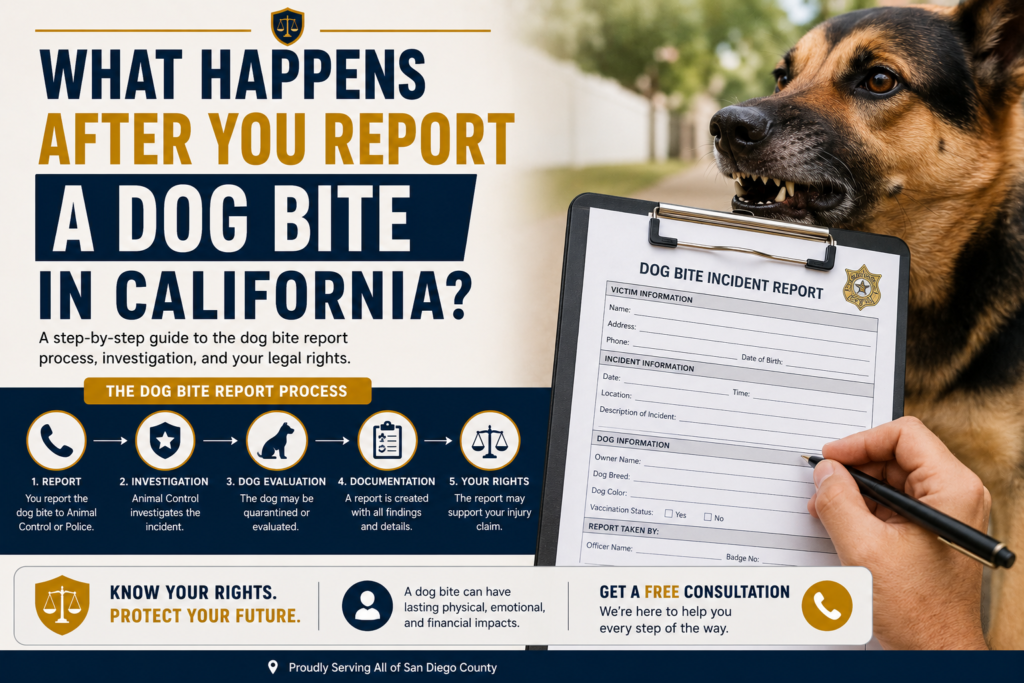
File a report with local animal control. This creates an official record of the incident, can trigger an investigation into the dog’s history, and may reveal prior biting incidents that strengthen your claim. Police reports, if law enforcement responds, are also important to obtain.
Collect Evidence at the Scene
If you’re able to, photograph the location where the attack happened, the dog, and any conditions that may be relevant. Get the dog owner’s name, address, and insurance information. Collect contact information from anyone who witnessed the attack, since witnesses who aren’t tracked down immediately are often impossible to find later.
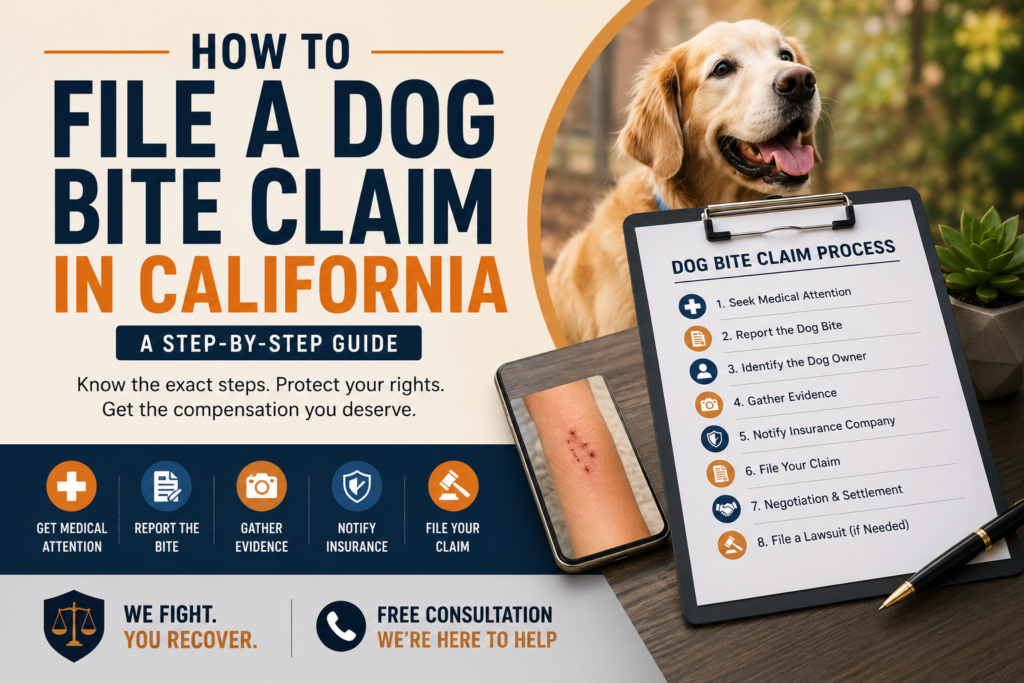
Our guide on what happens after a dog bite in California walks through these steps in more detail for anyone in the immediate aftermath of an attack.
Don’t Give a Recorded Statement to the Owner’s Insurer
The other dog owner’s insurance company will want to take a recorded statement from you. They’re not doing this to help you. They’re doing it to capture anything that can later be used to minimize the claim or assign some responsibility to your child. Speak with an attorney before giving any recorded statement.
Don’t Accept an Early Settlement Offer
Insurance companies often move fast with early offers, particularly in child injury cases, because they know families are shaken and may not yet understand what long-term medical costs are involved. An early offer almost never reflects the full value of a child’s claim, including future surgeries, ongoing therapy, and the pain and suffering your child will carry for years. Our article on who pays for a dog bite injury in California explains how insurance coverage typically works in these cases.
Common Mistakes Parents Make in Child Dog Bite Injury California Claims
These come up so often that they’re worth addressing directly, because each one can significantly reduce what a child ultimately recovers.
- Settling before the full extent of injuries is known. Scar tissue matures over months. Psychological effects often don’t fully present until weeks after the attack. Settling before the medical picture is complete means giving up damages that haven’t even shown up yet.
- Underestimating future medical costs. The surgery needed today is rarely the last surgery needed. Future scar revision, psychological treatment, and specialist care need to be projected and included before any settlement is finalized.
- Assuming the owner has no insurance. Many dog bite claims are paid through homeowners or renters insurance policies. Assuming there’s no coverage without actually investigating can result in walking away from compensation that’s available.
- Not involving a child dog bite attorney early enough. The earlier an attorney is involved, the better the evidence preservation, the stronger the documentation, and the clearer the picture of long-term damages. Waiting until just before a deadline limits options significantly.
- Letting the child describe the attack to the insurer. A child’s recollection of events, however honest, can be used to craft a provocation argument. Keep children away from insurance investigators.
Long-Term Recovery After a Child Dog Bite Injury in California
Physical recovery timelines for children vary widely depending on the severity of injuries. Wound closure and initial healing may take weeks. Scar maturation takes six months to two years. Revision surgeries may be recommended at several points during childhood and adolescence as the child’s face and body grow. Psychological recovery is harder to predict and often requires consistent therapeutic support over years, not months.
Families should be realistic about the road ahead and resist pressure to treat the case as closed just because the initial wounds have healed. The settlement your child receives has to cover not just what’s happened so far, but what’s reasonably likely to happen in the years ahead. That’s a calculation that requires medical expertise, legal knowledge, and enough time to actually understand the full scope of the injury.
For families dealing with the most serious injuries, including permanent disfigurement or neurological damage, our severe dog attack injuries page covers how these catastrophic cases are handled and what long-term compensation looks like.
When to Hire a Child Dog Bite Attorney
Any dog bite that breaks the skin on a child warrants a conversation with an attorney. A claim that looks simple at first, a small bite from a neighbor’s dog, for example, can turn out to involve significant scarring, infection complications, or psychological impact that wasn’t apparent initially. Most child dog bite attorneys offer free consultations and work on contingency, so there’s no financial risk to getting an informed opinion early.
You should contact an attorney immediately if your child suffered any of the following:
- A bite to the face, head, or neck
- Any injury requiring stitches, surgery, or emergency hospitalization
- Visible scarring or suspected nerve damage
- Signs of psychological trauma or behavioral changes after the attack
- A bite from a dog with a known history of aggression
- An attack where the owner or their insurer has already been in contact with you
Our dog bite claim San Diego team handles child injury cases throughout the county, including families in Downtown San Diego, Chula Vista, and El Cajon.
Frequently Asked Questions About Child Dog Bite Injury California
Can I file a claim if my child was bitten at a friend’s or neighbor’s house?
Yes. California Civil Code Section 3342 applies regardless of where the bite occurs, as long as your child was lawfully on the property. Being a guest at someone’s home means your child was there lawfully, and the owner’s strict liability applies fully.
What if the dog has never bitten anyone before?
It doesn’t matter under California law. Strict liability means the owner is responsible even if the dog had no prior history of biting. There is no “one free bite” protection for dog owners in California.
What is a child dog bite injury California claim actually worth?
There’s no formula that applies to every case. The value of a child dog bite injury California claim depends on the severity of physical injuries, the extent of scarring, projected future medical costs, psychological impact, and other case-specific factors. What’s consistent is that cases involving facial scarring, surgery, and documented psychological trauma to a child tend to be valued significantly higher than straightforward adult bite claims.
Does my child’s claim have to go through court?
Not necessarily in the litigation sense, but any settlement over $5,000 involving a minor typically requires a judge to review and approve it to confirm it’s fair and in the child’s best interest. This is a protective step, not a burdensome one.
What happens to the settlement money?
Courts typically require that settlement funds for a minor be placed in a blocked account or structured annuity until the child reaches 18. Parents generally cannot access the money without a court order unless it’s for specific approved expenses related to the child’s care.
How long does a child dog bite claim take?
It varies. Simple claims with clear liability and well-documented injuries can sometimes resolve in a few months. Cases involving serious injuries, disputed liability, or the court approval process for minor settlements take longer. Rushing to settle before the full picture of a child’s injuries is clear is almost always a mistake.
Can the dog owner’s homeowners insurance cover my child’s injuries?
In most cases, yes. Homeowners and renters insurance policies typically cover dog bite liability, and this is the most common source of compensation in these cases. An attorney can identify applicable coverage even when an owner claims they don’t have relevant insurance.
Your Child Deserves Full Compensation — Not a Quick Settlement
A child dog bite injury California law recognizes is not just a painful incident. It’s a legal matter with real financial consequences for your family’s future and your child’s quality of life. The insurance company handling the owner’s claim has experience managing these situations. Your family deserves someone equally experienced on their side.
We represent families throughout San Diego County whose children have been injured in dog attacks. We understand what full compensation for a child looks like, including future surgeries, ongoing therapy, pain and suffering, and the permanent impact of visible scarring, and we fight to make sure insurers don’t get away with undervaluing any of it.
Schedule a free dog bite consultation today. There’s no fee unless we recover compensation for your family, and no obligation to find out exactly what your child’s case is worth.
Visit the Dog Bite Lawyers San Diego homepage to learn more about how we help injured children and their families recover full compensation after a dog attack in San Diego County.