A dog attack can leave you with deep wounds, a stack of hospital paperwork, and no idea how any of it gets paid for. If you were bitten in San Diego or anywhere in California, you need to understand dog bite medical bill compensation California law before you talk to an insurance adjuster.
California law allows dog bite victims to recover the full cost of reasonable and necessary medical care tied to the attack. That includes care you’ve already received and treatment you’ll need in the future. Insurance companies count on victims not knowing this. We make sure you do.
Below, we break down exactly which bills qualify, how future treatment is calculated, what evidence you need to get paid in full, and the mistakes that quietly cost victims thousands of dollars every year.
Why California Dog Bite Law Favors Victims
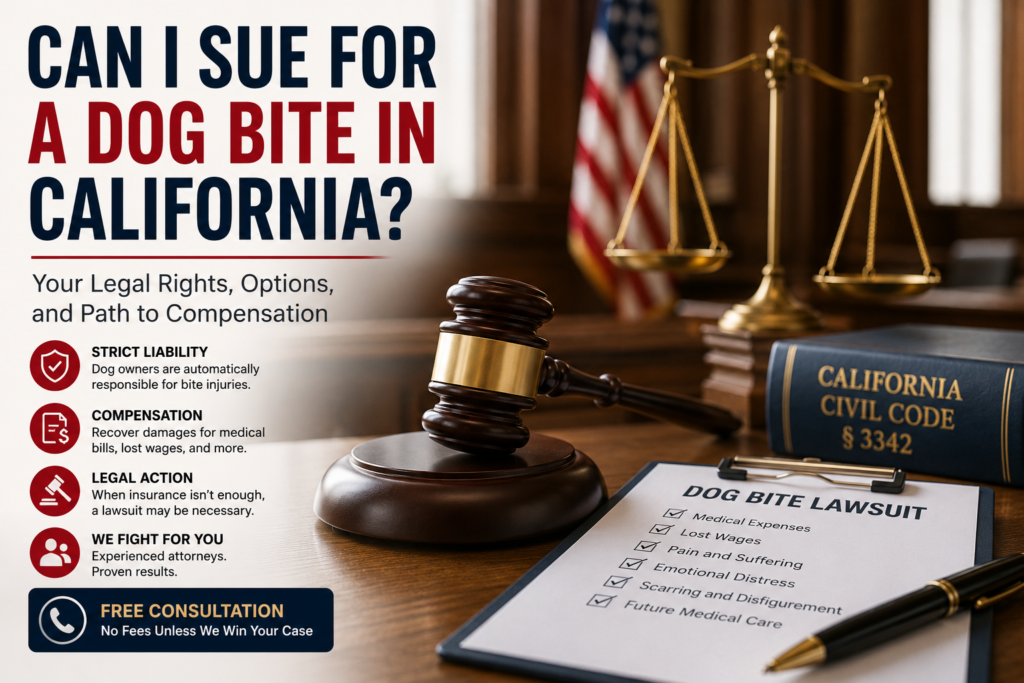
California is a strict liability state when it comes to dog bites. Under California Civil Code Section 3342, a dog owner is liable for injuries their dog causes to a person who is bitten in a public place or lawfully on private property, regardless of whether the dog has ever bitten anyone before or whether the owner knew the dog was dangerous.
This is different from many states, where a victim has to prove the owner knew or should have known the dog was aggressive. In California, the “one bite rule” doesn’t protect owners the way people assume it does. If their dog bit you and you were somewhere you had a legal right to be, liability is usually not the hardest part of your case.
That shifts the real fight to damages, specifically, how much your medical treatment actually costs and whether the insurance company is willing to pay for all of it. That’s where most disputes happen, and it’s why understanding dog bite medical expenses California rules matters so much.
What Medical Bills Can Be Recovered After a Dog Bite?
Once liability is established, the focus shifts entirely to your damages. Dog bite medical expenses California claims typically include every dollar spent treating the injury, from the moment paramedics arrive to the last day of physical therapy, and sometimes well beyond that.
Here’s what’s usually on the table.
Emergency Room Bills
Most dog bite victims go straight to the ER. Puncture wounds, lacerations, and crush injuries from a dog’s bite force often require immediate stitching, wound cleaning, and imaging to rule out fractures, tendon damage, or nerve injury. Emergency room charges are almost always among the largest line items in a claim, and they’re fully recoverable, including charges for imaging, lab work, and wound debridement performed during that initial visit.
Ambulance Costs
If paramedics transported you, that ambulance bill is part of your damages too. Ambulance rides in California are expensive even for short distances, and insurers sometimes try to argue transport wasn’t “necessary.” Documentation from the responding crew, including their notes on bleeding, shock symptoms, or the severity of the wound at the scene, usually settles that argument quickly.
Hospital Stays
Severe attacks, particularly facial injuries, deep muscle damage, or wounds requiring observation for infection risk, can mean an overnight stay or longer. Every night in the hospital, every nursing charge, every IV antibiotic, and every diagnostic test performed during that stay belongs in your claim. Multi-day hospitalizations are common with attacks involving large breeds, and the billing from these stays can run into the tens of thousands of dollars even before surgery is factored in.
Surgery Expenses and Plastic Surgery
Dog bite surgery compensation California claims often involve more than one procedure. Initial surgery might address torn tissue, repair tendons, or close deep wounds, while a second surgery, sometimes months later, deals with scarring or restricted mobility.
Reconstructive and plastic surgery to repair facial or visible scarring is fully compensable when a medical provider recommends it, even if that surgery hasn’t happened yet at the time you file your claim. This is one of the most underestimated parts of dog bite hospital bills California cases, and it’s where having an attorney who understands long-term scarring outcomes matters most. Our severe dog attack injuries page covers how these injuries are typically valued in more detail.
Prescription Medications
Antibiotics to prevent infection, pain medication, topical scar treatments, and sometimes rabies post-exposure treatment are standard after a dog bite. Rabies prophylaxis alone can involve multiple injections over several weeks and is rarely cheap. Keep every pharmacy receipt, even ones that seem minor. These costs add up fast and are easy to document when you have the paper trail.
Physical Therapy
Bites involving muscle, tendon, or nerve damage frequently require weeks or months of physical therapy to restore range of motion and strength, particularly with bites to the hands, arms, or legs. PT costs are recoverable as part of your dog bite treatment costs California claim, including travel to and from appointments when distance and frequency make that a real expense.
Mental Health Counseling
Dog attacks are traumatic, especially for children. Anxiety, nightmares, a fear of dogs, and in some cases symptoms consistent with PTSD are common after a serious bite. Therapy and counseling costs tied to that psychological injury are a legitimate part of your medical damages, not a separate or “extra” claim. Insurers sometimes try to treat mental health treatment as optional. It isn’t, and a treating therapist’s records establish that clearly.
Dog Bite Medical Bill Compensation California: What Bills Can Be Recovered?
To summarize, dog bite medical bill compensation California law is built around one principle: you should not pay out of pocket for an injury someone else’s dog caused. That covers emergency treatment, hospitalization, surgery, medication, therapy, and counseling, as long as the treatment is reasonable, necessary, and connected to the attack.
The harder question, and the one that often determines whether your settlement actually covers your future, is what happens with care you haven’t received yet.
Can Future Medical Expenses Be Included?
Yes. California law allows victims to recover the projected cost of future medical treatment when there’s reasonable medical evidence that it will be needed. Future medical expenses dog bite California claims are calculated based on expert input and documented prognosis, not guesswork or speculation.
This matters because many dog bite injuries don’t fully resolve by the time a claim is ready to settle. Insurers love to settle early, before the full extent of your injury is known, precisely because it limits what they have to pay. A scar that looks manageable at six weeks might require revision surgery at six months. Nerve damage that seems minor initially can turn into permanent numbness or weakness.
Follow-Up Appointments and Ongoing Care
Scar revision consultations, nerve damage monitoring, infection checks, and wound check-ups often continue for months or years after the initial injury. A treating physician’s documented recommendation for ongoing care is strong evidence for including these costs in your claim, even when an exact dollar figure isn’t available yet.
Medical Equipment and Assistive Devices
Severe bites involving tendons, joints, or significant tissue loss sometimes require braces, compression garments, scar treatment products, splints, or mobility aids. These items are part of your total medical damages and should be itemized just like a hospital bill, not lumped in as an afterthought.
How Future Costs Are Actually Calculated
Future medical expenses aren’t pulled out of thin air. They’re typically established through a treating physician’s written opinion, a life care planner’s projection, or testimony from a medical expert who reviews your records and outlines what future treatment is reasonably likely to cost. This is standard practice in serious injury cases, and it’s a core part of building a strong dog bite claim in San Diego. Done correctly, it’s often the difference between a settlement that covers your life going forward and one that leaves you short the moment a new bill arrives.
How Do You Prove Medical Expenses?
Compensation isn’t automatic. You have to prove the bills exist, that they’re connected to the attack, and that the treatment was reasonable. This is where many victims unintentionally weaken their own claims, often without realizing it until the insurance company’s offer comes in far lower than expected.
Keeping Medical Records and Receipts
Every bill, every receipt, every after-visit summary matters. Insurance adjusters compare your medical records against your billing statements line by line, looking for inconsistencies they can use to dispute charges. Gaps in documentation give them an excuse to argue treatment wasn’t related to the bite, or wasn’t necessary at all.
Save digital and paper copies of everything: ER discharge papers, surgical notes, pharmacy receipts, PT invoices, and counseling statements. If you’re not sure what counts as useful evidence, our guide on what evidence you need for a dog bite claim in California walks through it in detail, including photos, witness statements, and animal control reports that support your medical claim.
Health Insurance Reimbursement
If your health insurance paid for some of your treatment, your insurer may have a right to be reimbursed out of your settlement. This is called subrogation. It doesn’t reduce what you’re owed overall, but it does affect how the settlement is distributed between you and your insurer.
An attorney can often negotiate these liens down, especially when there are gaps between what the insurer paid and what the actual injury cost in terms of pain, scarring, and disruption to your life. Reducing a lien puts more of the settlement directly in your pocket rather than routing it back to the insurance company.
Out-of-Pocket Expenses
Co-pays, deductibles, parking at medical appointments, mileage to specialists, and even over-the-counter wound care supplies count. They seem small individually, but they’re part of your documented losses and should never be written off just because they don’t come with an official hospital letterhead.
Working With Medical Experts and Treating Physicians
In more serious cases, your attorney may need statements or testimony from treating physicians, plastic surgeons, or physical therapists to explain why certain treatment was necessary and why future care is likely. This isn’t about padding the claim. It’s about translating medical reality into something an insurance adjuster, or a jury, can clearly understand and value correctly.
How Insurers Evaluate Dog Bite Hospital Bills in California
Insurance companies don’t simply accept your bills at face value. Adjusters review whether each charge was “reasonable and necessary,” compare billing codes against what they consider standard rates for the region, and look for any reason to argue a treatment wasn’t related to the bite itself.
They also weigh the strength of your liability case. Under California Civil Code Section 3342, dog owners are strictly liable for bite injuries occurring in public places or while the victim was lawfully on private property. When liability is clear, adjusters tend to focus their pushback entirely on the value of your medical damages, which makes documentation even more important than it would be in a case where fault is disputed.
This is also where homeowners insurance often comes into play, since most dog bite settlements are paid through the owner’s policy rather than out of their personal savings. If you’re unsure how that works, our article on whether homeowners insurance covers dog bite claims in California explains the basics, including what happens when a policy has exclusions for certain breeds.
Comparative Fault and Medical Bill Recovery
Occasionally, an insurer will argue the victim did something to provoke the dog or contributed to the incident. California uses a comparative fault system, meaning your compensation can be reduced by your percentage of fault, but it isn’t eliminated just because the insurer raises the argument. A well-documented claim, supported by witness accounts and animal control reports, helps shut down weak provocation arguments before they ever affect your medical bill recovery.
Statute of Limitations and Why Timing Affects Your Bills
California generally gives dog bite victims two years from the date of the attack to file a lawsuit. That deadline matters for more than just paperwork. If your treatment is ongoing, waiting too long to get legal advice can mean you settle before your medical picture is even close to complete. Getting guidance early protects both your legal rights and the accuracy of your final medical bill total.
Common Mistakes That Reduce Your Dog Bite Treatment Costs California Reimbursement
We see the same avoidable mistakes repeatedly, and they almost always cost victims money they were otherwise entitled to.
- Delaying treatment. Gaps between the bite and medical care give insurers room to argue the injury wasn’t serious, or wasn’t caused by the dog at all.
- Skipping follow-up appointments. Missed appointments suggest you recovered faster than you actually did, which adjusters use to discount future treatment claims.
- Throwing away receipts. Lost documentation often means lost reimbursement for that specific expense, even if the treatment clearly happened.
- Settling too early. Accepting a quick settlement before your treatment is finished often means future medical expenses dog bite California claims never get included at all.
- Talking to the owner’s insurer without legal advice. Recorded statements can be used to minimize your claim later, even when you’re just trying to be honest and cooperative.
- Posting about the injury on social media. Photos or comments suggesting you’re recovering quickly can be used to argue your medical bills were excessive.
- Not tracking mileage and incidental costs. Small expenses add up, and most victims simply forget to track them.
Avoiding these mistakes protects the value of your case from day one. If you’ve already made one of them, it’s not necessarily fatal to your claim, but it does make experienced legal representation more important, not less.
What a Fair Settlement Should Actually Cover
A proper dog bite settlement accounts for every medical category discussed above, not just the most obvious ER bill. It should reflect what you’ve already paid and what reasonable medical evidence shows you’ll need going forward, plus non-medical damages like pain and suffering, lost income, and scarring.
Medical bills and pain and suffering are calculated differently, but they’re connected. The more severe and well-documented your medical treatment, the stronger the foundation for the rest of your claim. Insurers who lowball medical bills are often trying to suppress the entire value of the case, not just one line item.
When insurers won’t offer a number that reflects the real cost of your care, filing a dog bite lawsuit in San Diego may be the only way to recover what you’re actually owed. Litigation puts pressure on insurers to take future medical costs seriously instead of dismissing them as speculative or unnecessary.
If you want a sense of how these cases are typically valued, our breakdown of the average dog bite settlement in California and our explanation of who pays for a dog bite injury in California are good starting points before you speak with an adjuster.
Dog Bite Medical Bill Compensation California: Why Local Representation Matters
San Diego County juries, insurers, and medical providers each have their own tendencies, and an attorney who works these cases regularly knows how to navigate them. Local knowledge often translates directly into a more accurate valuation of your medical bills, because we know which providers in the area handle these injuries well and which insurance adjusters routinely lowball claims.
Whether you were bitten in Downtown San Diego, Chula Vista, or El Cajon, local experience helps ensure your medical bills are valued accurately from the start, not negotiated down by an adjuster who has never set foot in your community and doesn’t understand the cost of living or care in the area.
Frequently Asked Questions
What medical bills can I include in a California dog bite claim?
You can include emergency room treatment, ambulance transport, hospital stays, surgery, prescription medications, physical therapy, mental health counseling, medical equipment, and reasonable future treatment costs tied to the attack.
Can I recover compensation if my health insurance already paid some bills?
Yes. You can still pursue full dog bite medical bill compensation California through the at-fault party’s insurance. Your health insurer may be entitled to reimbursement from the settlement through subrogation, but this doesn’t reduce your overall right to recover the full value of your claim.
Do I need proof for every medical expense?
Yes. Bills, receipts, treatment records, and provider statements are the backbone of any claim. Without documentation, insurers will dispute or outright deny charges, even ones that clearly relate to your injury.
What if I need surgery months after the bite?
If a doctor documents the need for future surgery or treatment, that cost can be included in your claim through expert testimony or written medical projections, even if the procedure hasn’t happened yet at the time you settle.
Can I still recover medical bills if the dog owner doesn’t have insurance?
It’s more difficult, but not always impossible. Sometimes a renter’s or homeowner’s policy applies even if the owner assumes it doesn’t, or there’s an umbrella policy in place. An attorney can investigate available coverage before assuming there’s nothing to pursue.
How long do I have to file a dog bite claim in California?
Generally, you have two years from the date of the bite to file a personal injury lawsuit in California, though exceptions can apply in certain circumstances, such as cases involving minors. It’s best to speak with an attorney as soon as possible to protect your rights and your medical bill claim.
Will I have to pay anything upfront to hire a dog bite lawyer?
No. Most California dog bite attorneys, including our firm, work on contingency, meaning you pay nothing upfront and nothing at all unless we recover compensation for you.
Get Help Recovering Every Dollar You’re Owed
Medical bills after a dog attack shouldn’t fall on you. California law entitles victims to recover the full, documented cost of treatment, current and future, when another person’s dog causes the injury. The key is proving it correctly, with the right documentation and the right medical evidence, and that’s exactly what we do for clients throughout San Diego County.
If you’re trying to understand your options for dog bite medical bill compensation California law allows, don’t navigate it alone, and don’t accept the first number an insurance adjuster offers. Speak with an attorney who knows how these claims are actually valued, including the future costs adjusters routinely try to leave out.
Schedule a free dog bite consultation today. There’s no fee unless we win, and no obligation to find out what your case is really worth.
Visit our homepage to learn more about how we help dog bite victims throughout San Diego County recover full compensation for their medical bills, lost wages, and pain and suffering.