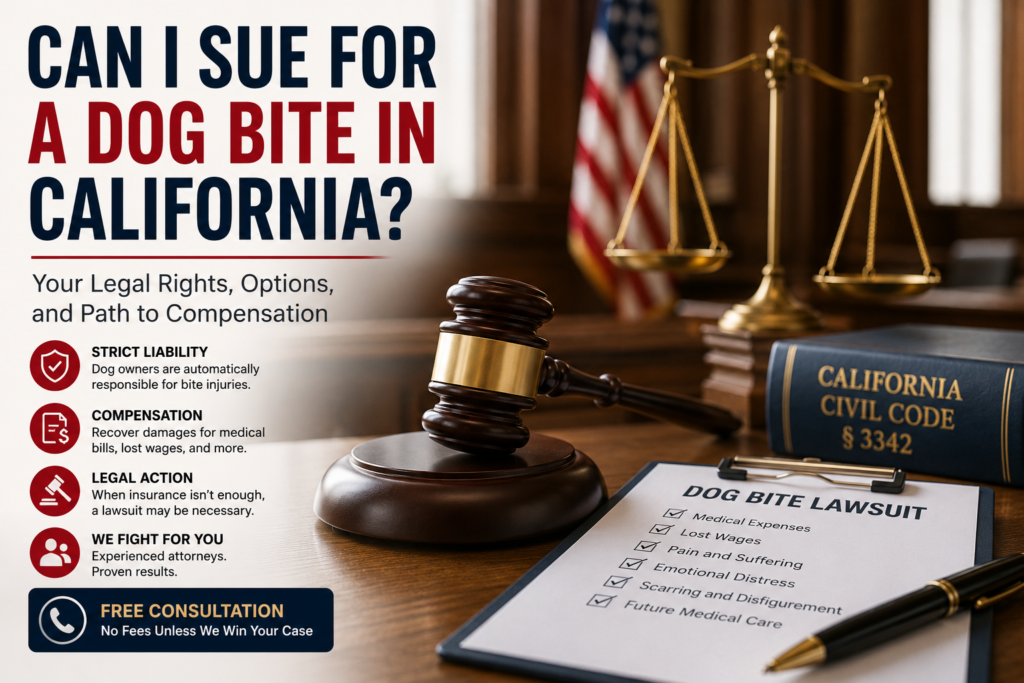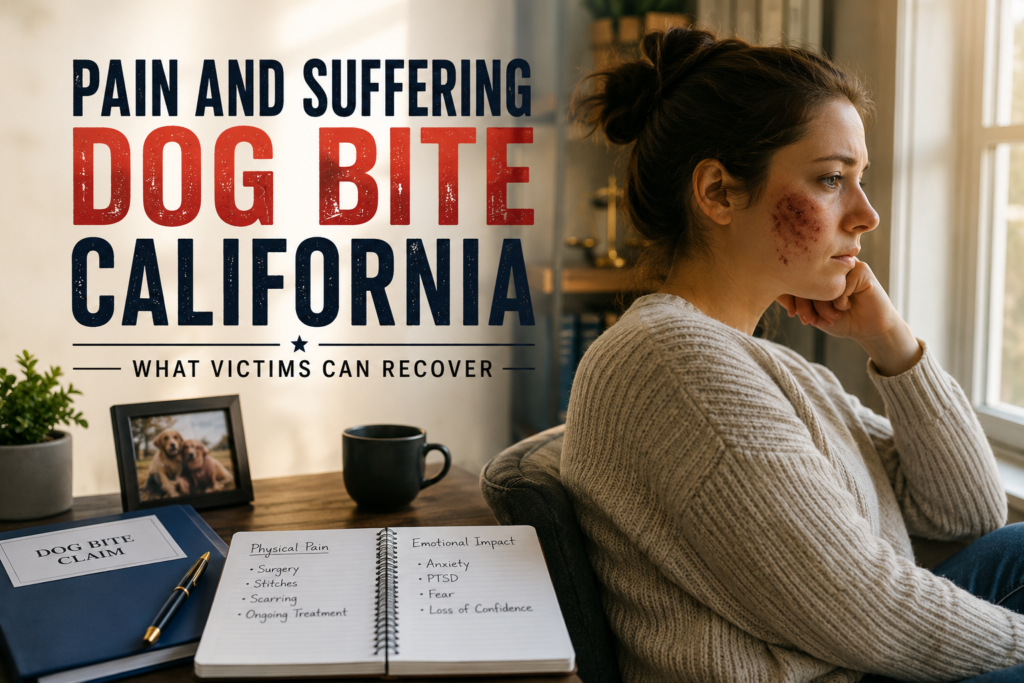
Pain and suffering dog bite California claims represent a category of compensation that many victims do not fully understand — and that insurance companies rely on that misunderstanding to undervalue. When an adjuster sends an early settlement offer covering your medical bills and a small additional amount, they are hoping you accept before you realize that the physical pain, psychological trauma, permanent scarring, and life disruption caused by a violent dog attack can represent a far more substantial portion of your total claim than the medical bills themselves.
This article explains exactly what pain and suffering damages mean in a California dog bite claim — what they cover, how they are documented, how insurance companies evaluate them, and what victims can do to ensure these damages are not minimized or overlooked during settlement negotiations. If you have been through the rest of our California dog bite legal series, this article focuses specifically on the non-economic damage layer that is often the largest component of a serious injury claim.
What Pain and Suffering Damages Actually Cover in a California Dog Bite Claim
California personal injury law divides recoverable damages into two categories: economic damages, which cover measurable financial losses like medical bills and lost wages, and non-economic damages, which compensate for the human cost of the injury beyond what receipts and pay stubs can quantify. Pain and suffering is the primary category of non-economic damages — and it encompasses far more than the phrase suggests.
In a California dog bite claim, non-economic damages can include the physical pain of the bite itself and the recovery process, ongoing or chronic pain from nerve damage or unresolved injuries, psychological trauma and emotional distress following the attack, post-traumatic stress disorder, fear of dogs and related phobias, anxiety, depression, sleep disturbances, permanent scarring and disfigurement, embarrassment from visible injuries, loss of enjoyment of life, and the impact of severe injuries on personal relationships. Under California law, there is no statutory cap on non-economic damages in personal injury cases. In serious injury claims, these damages frequently exceed the economic damages component of the total claim value.
Understanding the full scope of what is compensable under this category is the foundation of protecting your claim’s value. Insurance companies understand it — which is why adjusters are specifically trained to minimize non-economic damage claims through early offers, social media monitoring, and recorded statements gathered before victims understand what their case is actually worth.
Pain and Suffering Dog Bite California — The Physical Dimension
The Immediate Pain of the Attack
Dog bite wounds are among the more painful acute injuries a person can experience. The combination of puncture injury, tearing, and the physical force of the attack produces intense immediate pain that begins at the moment of the bite and continues through the entire treatment process — cleaning, irrigation, wound closure, and the days of recovery that follow. This immediate physical pain is a recognized and compensable element of the damages claim.
Chronic Pain and Nerve Damage
A significant percentage of serious dog bite injuries produce lasting physical pain that extends well beyond the initial healing period. Nerve damage is particularly common in bites to the hands, fingers, face, and arms — areas with high nerve density where the penetrating force of a bite can sever or damage nerve tissue that either does not fully recover or recovers over a prolonged period with significant ongoing pain.
Chronic pain from nerve damage — manifesting as burning, numbness, hypersensitivity, or persistent aching — can continue for months, years, or permanently. It affects daily functioning, sleep quality, the ability to perform work tasks, and quality of life in ways that a finite medical bill simply does not capture. For victims of severe dog attack injuries involving documented nerve damage, the chronic pain component of the non-economic damages claim is one of the most significant value drivers in the entire case.
Scarring, Disfigurement, and the Physical Permanence of Dog Bite Injuries
Permanent scarring is treated as a standalone damage category under California law — distinct from general pain and suffering but equally non-economic in nature. Compensation for scarring accounts for the permanent physical mark itself, future cosmetic or reconstructive procedures it may require, the visibility of the scar in professional and social contexts, and the psychological impact of living with a visible reminder of a traumatic event.
Facial scarring carries the highest recognized compensation value because of its constant visibility, its resistance to concealment, and its effect on every interpersonal interaction the victim has for the rest of their life. Scarring on the hands, neck, and forearms is similarly visible and similarly impactful. Even scarring on less visible body areas has compensable value — the relevant question is not just where the scar is but how it affects the victim’s daily experience, self-perception, and relationships.
For victims in communities including Downtown San Diego, Chula Vista, El Cajon, and Escondido, our attorneys routinely engage plastic surgeons and reconstructive specialists to document scarring damages professionally — producing the expert assessment that supports this component of the claim at the level insurance companies take seriously.
The Psychological Dimension of Dog Bite Pain and Suffering
Post-Traumatic Stress Disorder
A violent dog attack is a traumatic event by any clinical standard — sudden, unpredictable, physically harmful, and frequently involving real fear for one’s safety. Post-traumatic stress disorder is a diagnosable, well-documented consequence of dog attacks, particularly those involving serious physical injury or attacks on children. PTSD symptoms following a dog bite include intrusive memories and flashbacks of the attack, hypervigilance in environments where dogs may be present, avoidance of places associated with the attack, nightmares, emotional numbing, and difficulty concentrating.
PTSD is not a subjective complaint — it is a clinically diagnosed condition with a formal diagnostic framework and established treatment protocols. When a licensed mental health professional diagnoses and documents PTSD following a dog attack, that diagnosis creates medical record evidence of non-economic damages that is substantially harder for an insurer to dismiss than a victim’s self-reported distress. Ongoing treatment records — therapy sessions, psychiatric medication management, clinical progress notes — document both the existence of the condition and the continuity of its impact over time.
Fear of Dogs and Cynophobia
A dog bite can produce a lasting and clinically significant fear of dogs — cynophobia — that fundamentally changes how the victim navigates daily life. In a state like California where dogs are present in virtually every neighborhood, park, and public space, a serious fear of dogs is not a minor inconvenience. It affects where a victim can walk, what routes they take, whether they can visit friends and family who own dogs, and how they feel moving through their own community. For victims in dog-friendly areas across San Diego County, this phobia can impose meaningful restrictions on daily life that are fully compensable as loss of enjoyment of life damages.
Anxiety, Depression, and Sleep Disturbances
Clinical anxiety and depression are recognized consequences of serious dog attacks, particularly when the attack was violent, involved significant injury, or occurred in a context the victim previously considered safe — outside their home, at a neighbor’s property, at a park they regularly use. Sleep disturbances — including difficulty falling asleep, nightmares about the attack, and disrupted sleep patterns — have direct functional consequences affecting work performance, cognitive function, and overall wellbeing. When these conditions are clinically documented and treated, they represent recoverable non-economic damages that add measurable value to a California dog attack injury claim.
Loss of Enjoyment of Life
Loss of enjoyment of life is a distinct non-economic damages category that addresses the activities, hobbies, experiences, and dimensions of daily living that the injury has taken from the victim. A runner who can no longer run due to nerve damage in their leg. A parent who can no longer play physically with their children due to a hand injury. A person who can no longer use a beach they have frequented for years because their phobia of the dog that attacked them there prevents it. Each of these is a specific, documentable loss of an activity or experience the victim previously had and can no longer enjoy — and each is compensable under California law.
How Do You Prove Pain and Suffering After a Dog Bite?
Pain and suffering damages are non-economic — they do not come with receipts or billing statements. This is why many victims undervalue them and why insurance companies work hardest to minimize them. But non-economic does not mean un documentable. The evidentiary foundation for pain and suffering damages in a California dog bite claim is built from multiple independent sources, each of which adds credibility and specificity to the claim.
Medical records are the primary foundation. Treatment notes that describe the patient’s pain levels, functional limitations, and recovery trajectory throughout the treatment period create a clinical record of physical suffering that is difficult to dispute. Specialist assessments — neurologist evaluations for nerve damage, plastic surgeon assessments for scarring, orthopedic evaluations for bone or joint injuries — add professional medical authority to specific damage components.
Mental health treatment records document the psychological dimension. A licensed therapist’s clinical notes, a psychiatrist’s diagnosis and medication management records, and progress notes tracking the victim’s psychological condition over time create the evidential record for PTSD, anxiety, and other psychological consequences. As discussed in our detailed guide on evidence for a California dog bite claim, mental health treatment records are one of the most underutilized evidence categories in personal injury cases — and their absence leaves a compensable damage category entirely unsubstantiated.
Photographic documentation of injuries throughout the recovery period — from pre-treatment images taken immediately after the attack through periodic documentation of healing and permanent scarring — creates visual evidence of physical suffering that medical text descriptions alone do not match for persuasive impact.
A personal injury journal maintained throughout the recovery period provides first-person, contemporaneous documentation of daily pain levels, sleep quality, emotional state, activities the victim could not perform, and the ways the injuries affected every aspect of their daily life. Insurance adjusters and juries find contemporaneous written records more compelling than retrospective accounts because they reflect the victim’s actual experience as it occurred — not a reconstruction of it months or years later.
Witness testimony from people who observed the victim’s condition, limitations, and behavioral changes following the attack adds external corroboration. Family members, coworkers, close friends, and treating providers can all speak to observable changes in the victim’s functioning, mood, and daily life that the victim’s own account alone cannot fully capture.
Expert opinions from pain management specialists, psychologists, psychiatrists, and life care planners are used in serious injury cases to project the future extent and duration of pain and suffering and to provide professional testimony supporting non-economic damages valuations at mediation and trial.
As our guide on mistakes that hurt California dog bite claims explains, failing to seek mental health treatment, not maintaining a personal injury journal, and accepting early settlement offers before the full psychological impact of the attack has developed and been documented are among the most consistently costly errors victims make in the claims process.
What Factors Increase Pain and Suffering Damages?
Certain characteristics of a dog bite case consistently produce higher pain and suffering valuations. The severity and permanence of physical injuries are the most direct driver — a victim living with permanent nerve damage, chronic pain, and facial scarring has a larger compensable suffering experience than one whose injuries fully resolved in three weeks. The psychological impact, when clinically documented and treated, adds substantial value that a physical injury claim alone does not capture.
The location of injuries matters significantly. Facial injuries, hand injuries, and injuries in socially visible locations produce higher non-economic damages because their impact is constant and pervasive rather than limited. The victim’s age affects the duration over which damages extend — injuries suffered by younger victims span more years of life, multiplying the impact of permanent consequences.
Clear, compelling documentation throughout the recovery period — photographs, journal entries, consistent medical and mental health treatment records, and expert support for future projections — transforms non-economic damages from asserted generalizations into specific, supported claims that insurance companies and juries treat as credible. As our article on how long a dog bite settlement takes in California explains, the evidence-building process often requires patience — but the financial difference between a thoroughly documented non-economic claim and an underdocumented one is consistently significant.
Prior incidents involving the same dog, when discovered through animal control records or prior complaint history, add context that supports higher non-economic valuations and in some cases creates arguments for punitive damages beyond standard compensatory recovery. Our team pursues this investigation as a standard part of every case preparation for clients seeking dog bite claims in San Diego.
Can Children Recover Pain and Suffering Damages After a Dog Bite?
Yes — and in many cases, children’s pain and suffering damages are higher than comparable adult cases for reasons directly tied to the nature of childhood development and the long-term consequences of trauma during formative years. Child dog bite cases receive specific attention in California courts because of these recognized differences.
The psychological impact of a violent dog attack on a child is not simply a scaled-down version of adult trauma. Children are in active developmental phases during which traumatic experiences can have disproportionate and lasting effects. A child who develops a serious fear of dogs, PTSD, or significant anxiety following an attack carries those consequences through school years, adolescence, and into adulthood in ways that affect social development, educational experience, and long-term psychological wellbeing. The duration over which these damages extend is longer for a child victim, and the developmental consequences compound in ways that do not apply to adult victims.
Physical scarring on a child similarly extends over more years of life — through the self-conscious years of adolescence, through the social and professional contexts of young adulthood, and across decades more of lived experience than the same injury would affect an older adult. Future medical costs for reconstructive procedures are projected over a longer timeline. Loss of enjoyment of life damages account for more years of restricted activity.
California law also recognizes that the standard for evaluating a child’s conduct — including in the context of provocation defenses raised by dog owners or their insurers — is age-appropriate. A young child’s behavior in the presence of a dog is evaluated against what is normal and expected for that age, not against an adult standard of care. This makes comparative fault arguments significantly harder to sustain in child dog bite cases, which in practice means the liability picture is cleaner and the full non-economic damages claim is less susceptible to reduction.
How Insurance Companies Evaluate Pain and Suffering in Dog Bite Claims
Understanding how the other side evaluates your non-economic damages is as important as understanding what they are. Insurance adjusters do not simply accept the victim’s account of their suffering — they apply a systematic evaluation designed to minimize what they pay for this component of the claim.
Adjusters look for gaps in treatment as evidence that suffering was not as prolonged or severe as claimed. They monitor social media for any content that contradicts the victim’s described limitations or emotional state. They analyze recorded statements for language that minimizes injury severity or suggests rapid recovery. They probe for any comparative fault angle that could reduce the overall damages picture. And they make early settlement offers specifically timed to close claims before mental health treatment has produced clinical documentation and before the victim has had time to understand what their non-economic damages are actually worth.
This is precisely why legal representation before any insurance contact matters as much as it does. An attorney managing the claims process from the beginning prevents recorded statement mistakes, protects the social media record, builds the complete non-economic damages documentation in parallel with ongoing treatment, and negotiates from an informed position with credible litigation readiness. The difference between what adjusters offer unrepresented victims and what experienced attorneys recover for represented clients on non-economic damages is among the most consistent and measurable advantages of professional legal representation in California dog bite settlements.
Frequently Asked Questions — Pain and Suffering Dog Bite California
Is there a limit on pain and suffering damages in California dog bite cases?
No. California does not impose a statutory cap on non-economic damages in personal injury cases. This means pain and suffering, emotional distress, scarring, PTSD, and loss of enjoyment of life are all recoverable without a ceiling — the compensation reflects the actual scope and severity of what the victim experienced and continues to experience as a result of the attack. This is one of the most victim-favorable aspects of California personal injury law.
How is pain and suffering calculated in a California dog bite claim?
California law does not mandate a specific calculation method for non-economic damages. Attorneys and courts use two primary approaches in practice. The multiplier method applies a factor — based on injury severity and permanence — to the total economic damages to produce a non-economic damages figure. The per-diem method assigns a daily dollar value to the victim’s suffering and multiplies it by the number of affected days. Both approaches are tools for negotiation and presentation — neither is legally mandated, and neither produces a precise formula that overrides the factual specifics of the individual case.
Can I claim emotional distress even if my physical injuries were relatively minor?
Yes. Physical and psychological consequences of a dog attack are compensable independently. A bite that produced limited physical injury but triggered significant PTSD, a lasting phobia of dogs, or clinical anxiety can produce meaningful non-economic damages supported by mental health treatment records. The value of the emotional distress claim reflects the documented severity and duration of the psychological consequences, not the severity of the physical injury that triggered them.
What if I didn’t seek mental health treatment — can I still claim emotional distress?
You can assert emotional distress damages without a clinical treatment record, but doing so makes them significantly harder to prove and substantially easier for an insurer to minimize. Undocumented emotional distress is asserted rather than evidenced — which gives the adjuster a basis for offering very little for that component. Seeking mental health treatment after a serious dog attack is both appropriate for your wellbeing and the most effective way to create the clinical documentation that supports the full value of your psychological damages.
How long do I have to file a dog bite claim that includes pain and suffering damages in California?
California’s statute of limitations for personal injury claims, including dog bite claims, is generally two years from the date of the attack. All compensable damages — including pain and suffering, emotional distress, and scarring — must be pursued within that timeframe. For bites involving government property, a six-month administrative claim deadline may apply. Contact an attorney promptly to protect all applicable deadlines and to begin building the non-economic damages documentation that supports your claim’s full value.
Protect the Full Value of Your Pain and Suffering Claim
Pain and suffering damages in a California dog bite case are not a secondary consideration — for serious injuries, they often represent the largest single component of total compensation. Protecting them requires early medical and mental health treatment, consistent documentation throughout recovery, careful management of social media and recorded statements, and professional legal representation from attorneys who understand how non-economic damages are built, documented, and defended in both settlement negotiations and litigation.
If a dog bit you or your child anywhere in San Diego County, a completely free case evaluation is available now through our team at dogbitelawyersandiego.com. We handle every component of your claim — including the full non-economic damages picture — with no upfront fees and no attorney costs unless we recover compensation for you. Contact us today to get started.
Bitten by a Dog in California?
Get answers about your legal rights, potential compensation, and the next steps after a dog bite injury.